

Crew To Leader Supervisor Guide
Information for the people who are directly supervising and supporting participants in their day-to-day work.

What is Crew to Leader 101?
Crew to Leader is a 6 module online program that helps emerging leaders understand the kind of leader they want to be and begin putting practical leadership behaviours into action at work.
Each module takes the participant approximately 30 minutes to complete, followed by opportunities to practise and embed the learning on the job.
Your Role as a Supervisor
You don’t need to teach the program or complete the modules yourself.
Your role is to help the participant connect what they are learning to the workplace by:
Asking about their key takeaways
Providing opportunities to practise
Observing changes in their behaviour
Offering feedback and encouragement
Checking that they are progressing through the program

Here’s What They Will Learn:
Crew to Leader is all about helping your crew build practical leadership skills they can use on the job even without a leadership title.
Across 6 online modules, they’ll learn more about themselves as a leader, how they impact the people around them and the everyday behaviours that help build a strong crew.
1. What kind of leader do you want to be?
They’ll learn: How they want to be known as a leader and the personal standards they want to set for themselves.
Look for: Greater awareness of how their behaviour affects others.
Support them by: Acknowledging when their actions reflect their chosen leadership standards and discussing where they could demonstrate them more consistently.
Ask them: “What’s one thing you want people to be able to say about you as a leader?”
2. You don’t need a title to lead
They’ll learn: What good leadership looks like and how they can positively influence others without having a formal leadership title.
Look for: Confidence, positive influence and a willingness to support others.
Support them by: Recognising moments when they step up and suggesting appropriate opportunities to practise leading from where they are.
Ask them: “Where do you think you could step up and show leadership in your role right now?”
3. Create a positive impact on you and your crew
They’ll learn: How their attitude, actions and communication affect the people around them.
Look for: Clear communication, stronger teamwork and a positive contribution to the crew.
Support them by: Giving feedback on the impact they have on others and discussing how they could contribute more positively in different situations.
Ask them: “What’s one thing you could do differently to have a more positive impact on the crew?”
4. Leading by example
They’ll learn: How to demonstrate important standards across safety, accountability, communication and professionalism.
Look for: Reliability, consistency and behaviour that reflects the standards expected from others.
Support them by: Acknowledging when they set a strong example and identifying areas where their actions could better reflect the standards they expect.
Ask them: “What’s one standard you want to make sure you’re consistently setting for yourself and others?”
5. Proactive leader
They’ll learn: How to take initiative, speak up, act early and take greater ownership.
Look for: Initiative, solution-focused thinking and increased confidence when stepping up.
Support them by: Creating appropriate opportunities to take ownership and providing feedback on how they approached the situation.
Ask them: “Where could you take more initiative instead of waiting for someone else to step in?”
6. Setting goals for proactive leadership
They’ll learn: How to reflect on their progress and set a practical leadership goal to continue working towards.
Look for: Self-awareness, ownership of their development and continued application of their learning.
Support them by: Helping them choose a realistic goal and identifying opportunities to practise it in their day-to-day role.
Ask them: “What’s one leadership goal you want to focus on, and what could you do at work to practise it?”
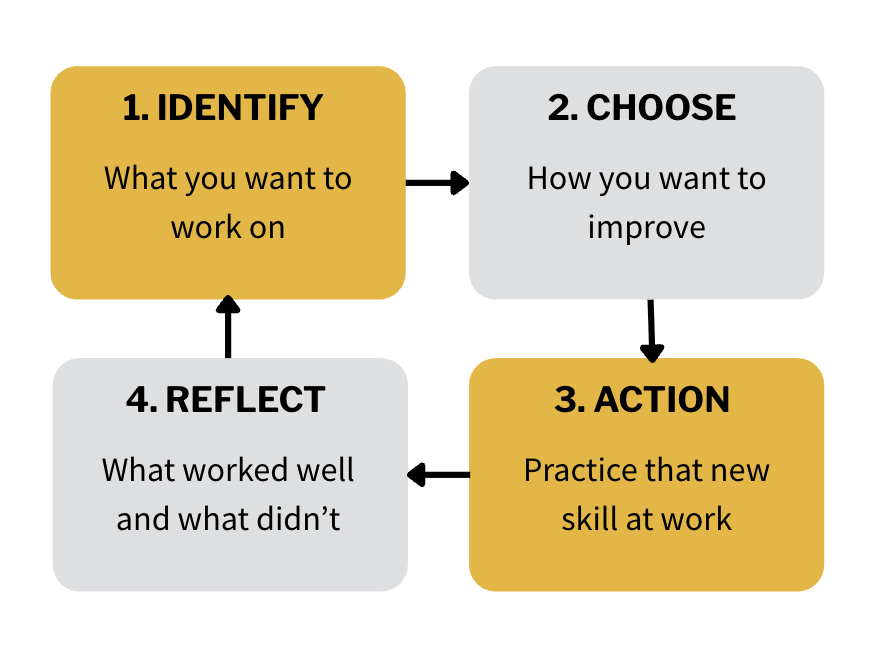
Throughout the program, they participants will use this process to turn what they’ve learned into practical leadership skills.
1. Identify the leadership skill or behaviour they want to focus on and develop.
2. Choose how they want to improve and what they would like to do differently.
3. Action their learning by practising the new skill in real situations at work.
4. Reflect on how it went, what worked well and what they could adjust or improve next time.
Then, keep practising and reflecting until the skill becomes part of how they lead.
From there, they’ll identify what they want to work on next and keep building their leadership toolkit.
How It Works

How You’ll Support Them
Regular, informal check-ins will help the participant stay on track and put their learning into practice.
These conversations don’t need to be long or formal. You could ask:
What was your biggest takeaway?
How could you apply that at work?
Have you had an opportunity to practise it?
What went well?
What did you find challenging?
What would you do differently next time?
What would you like to focus on next?
The goal is to help the participant turn their learning into everyday leadership behaviour.

Where to Direct Participants for Support
Participants may come to you with questions throughout the program. Where you direct them will depend on the type of support they need.
Support From You As Their Supervisor
You can help participants apply their learning in the workplace. This may include talking through real situations, suggesting ways to practise new skills and providing feedback on their progress.
You’re not expected to teach the course or have all the answers.
Your People & Culture Team
Direct them to your organisation’s People & Culture team if they’re falling behind their agreed learning schedule, need to discuss their participation or timelines, or are experiencing login or access issues.
Our Crew to Leader Program Support
Direct them to the Lead with Purpose team if they need help understanding the course content, completing a module or activity or answering questions about the program.
crewtoleader@leadwithpurpose.com.au

Did You Know Crew to Leader is a 3 Part Leadership Development Program?
Whether your people have been enrolled in one Crew to Leader program or across the full three-part series, each program focuses on a different stage of their leadership development. Here’s a quick look at how the Crew to Leader programs work together to build practical leadership capability.
Crew to Leader 101
Building a leadership mindset and habits
Crew to Leader 101 builds the foundations of leadership, helping participants understand how they show up, the impact they have on others, and the everyday mindset and habits that make a strong leader.
Crew to Leader 102
Leading through strong communication
Crew to Leader 102 focuses on building practical communication skills, helping participants communicate clearly, listen effectively, navigate conversations and build stronger working relationships with their team.
Crew to Leader 103
From doing the work to leading the work
Crew to Leader 103 helps participants make the shift from doing the work themselves to effectively leading others, building the skills to set expectations, provide direction, support performance and take ownership.
Crew To Leader Supervisor Information
Frequently Asked Questions
-
No. You aren’t expected to complete or teach the program. The module overview on this page gives you the information you need to support the participant.
-
Your role is to help the participant apply their learning at work. You can do this by checking in, creating opportunities to practise and providing feedback on what they’re doing well and where they can improve.
-
Have a brief conversation after each module or during each swing. Check-ins don’t need to be formal or lengthy. A few thoughtful questions can be enough.
-
Be specific about what you observed. Acknowledge what worked well, explain where they could improve and suggest how they could approach a similar situation next time.
You could ask:
What was your biggest takeaway?
How could you apply that here at work?
Have you had an opportunity to practise it?
What went well?
What would you do differently next time?
-
You’re not expected to have all the answers. For questions about the course content or activities, direct them to the Lead with Purpose team at crewtoleader@leadwithpurpose.com.au
-
Start by asking what is getting in the way. If they need to discuss their learning schedule or participation, or are experiencing login or program access issues, direct them to your organisation’s People & Culture team.
-
The program organiser who enrolled participants will receive an update at the end of the program.